
Can You Jump a Car in the Rain? Is It Safe? ⛈️
August 24, 2026
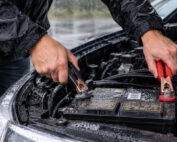
A dead car battery is frustrating enough. When it happens during a rainstorm, you may have another concern: Can you jump a car in the rain?
The short answer is yes, you can generally jump-start a car in the rain, provided you follow the proper safety precautions. A typical 12-volt automotive battery does not produce enough voltage for rain alone to make jump-starting inherently dangerous. However, wet conditions can make the process more difficult and introduce other hazards, so it’s important to know what you’re doing before connecting the jumper cables.
Below, we’ll explain how to jump a car in the rain safely, what precautions to take, and when it’s better to call for professional assistance.
Is It Safe to Jump Start a Car in the Rain?
Yes, in most circumstances, it is safe to jump start a car in the rain. Automotive electrical systems are designed to operate outdoors and withstand exposure to normal weather conditions.
The bigger concerns when jump-starting a vehicle in wet weather are improper cable connections, damaged equipment, slippery conditions, poor visibility, and severe weather.
If you’re standing in heavy rain, dealing with flooding, or experiencing lightning nearby, don’t attempt to jump the vehicle. Wait for conditions to improve or contact roadside assistance.
Can You Jump a Car Battery in the Rain?
If you’re wondering, “Can I jump my car in the rain?”, the answer is usually yes.
The 12-volt battery found in most gasoline-powered passenger vehicles is relatively low voltage. Rainwater on the vehicle or pavement doesn’t suddenly turn the battery into a major electrocution hazard.
However, car batteries can produce very high electrical current. Incorrectly connecting jumper cables can create sparks, damage electrical components, or potentially cause a battery to rupture.
That’s why proper jumper cable placement matters whether it’s raining or completely dry outside.
Can You Jump a Car in the Rain With Jumper Cables?
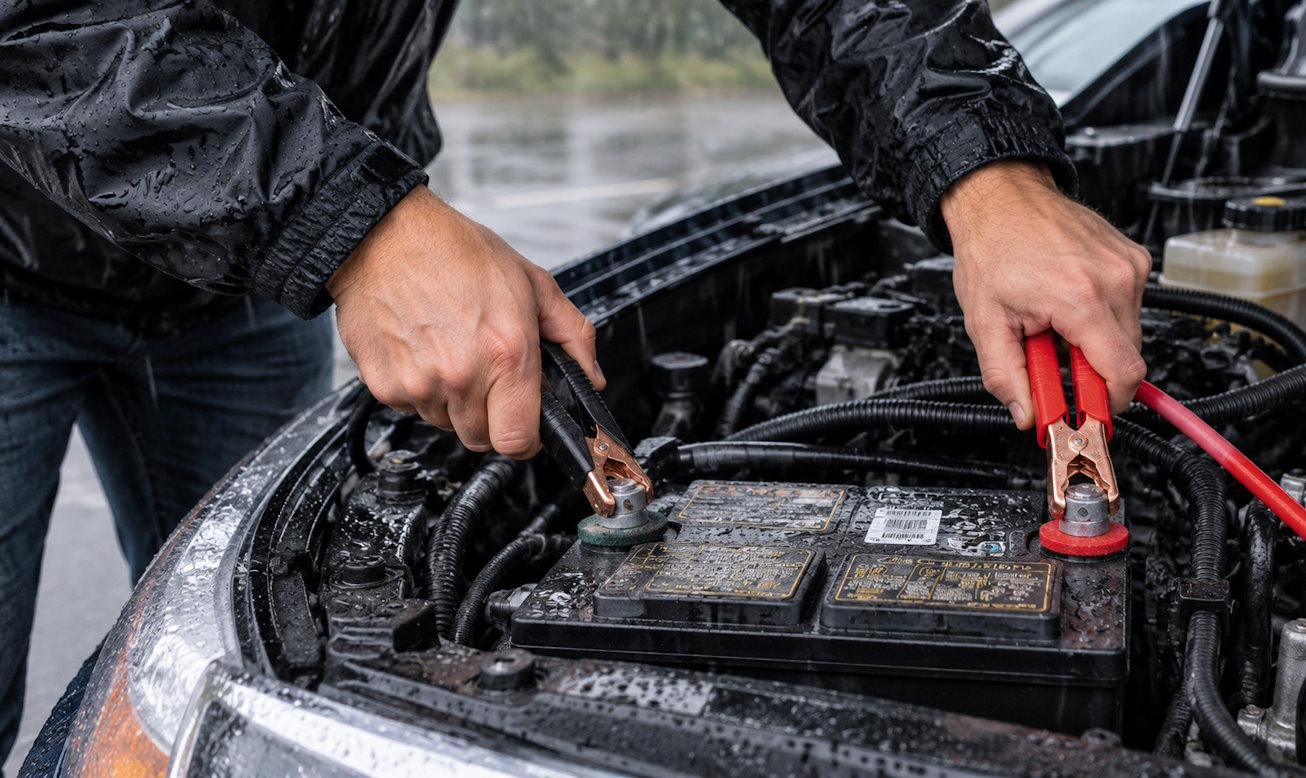
Yes. You can use traditional jumper cables in light or moderate rain as long as the cables and clamps are in good condition and you follow the correct procedure.
Before getting started, inspect your jumper cables. Don’t use cables with exposed wiring, severely damaged insulation, broken clamps, or other obvious defects.
You should also position the vehicles so they’re close enough for the cables to reach without allowing the vehicles themselves to touch.
How to Jump a Car in the Rain Safely
If weather conditions are reasonable and both vehicles use compatible 12-volt battery systems, you can generally follow the same jump-starting procedure you would in dry weather.
1. Park Both Vehicles Safely
Park the working vehicle close enough for the jumper cables to reach the dead battery. Put both vehicles in Park (or Neutral for a manual transmission), engage the parking brakes, and turn off the ignition.
Make sure you’re parked somewhere safe and visible to other drivers.
2. Turn Off Electrical Accessories
Turn off headlights, climate controls, radios, heated seats, and other unnecessary accessories before connecting the cables.
3. Locate the Battery Terminals
Identify the positive (+) and negative (-) terminals.
Some newer vehicles have designated jump-start terminals under the hood rather than requiring you to connect directly to the battery. Check the owner’s manual if you’re unsure.
4. Connect the Positive Jumper Cable
Attach one red positive clamp to the positive (+) terminal of the dead battery.
Connect the other red clamp to the positive (+) terminal of the working battery.
5. Connect the Negative Cable
Attach one black negative clamp to the negative (-) terminal of the working battery.
For the final connection, attach the remaining black clamp to a solid, unpainted metal grounding point on the vehicle with the dead battery, away from the battery itself.
Always follow the vehicle manufacturer’s recommended jump-starting procedure, as instructions can vary between vehicles.
6. Start the Working Vehicle
Start the vehicle with the good battery and allow it to run briefly.
Then attempt to start the vehicle with the dead battery.
Avoid repeatedly cranking the engine if it doesn’t start. A vehicle that won’t start after a few reasonable attempts may have a problem beyond a discharged battery.
7. Disconnect the Cables Carefully
Once the disabled vehicle is running, remove the jumper cables in the reverse order, being careful not to let the clamps touch each other or other unintended metal surfaces.
What Should You Avoid When Jumping a Car in the Rain?
Although the answer to “Can you jump your car in the rain?” is generally yes, there are situations where you shouldn’t attempt it.
Avoid jump-starting a vehicle if:
- The battery is cracked, leaking, swollen, or visibly damaged.
- The vehicle or battery is sitting in standing or flood water.
- Lightning or severe thunderstorms are nearby.
- The jumper cables are damaged or have exposed wiring.
- You can’t clearly identify the positive and negative terminals.
- The vehicles have incompatible electrical systems.
- The owner’s manual specifically warns against the procedure you’re attempting.
If you aren’t comfortable making the connections, getting professional help is safer than guessing.
Can You Jump a Car in Heavy Rain?
Light rain is one thing. A severe storm is another.
If heavy rain is creating poor visibility, flooding, dangerous roadside conditions, or lightning, wait until conditions improve. Your primary concern shouldn’t just be the battery—it should be your overall safety.
This is especially important if the vehicle is disabled along a busy road. Standing between or alongside vehicles in low-visibility conditions can be significantly more dangerous than the jump-start itself.
Does Rain Affect a Car Battery?
Rain itself doesn’t normally cause a healthy battery to suddenly die. However, weather conditions can contribute indirectly to battery problems.
Cold temperatures can reduce a battery’s available power, while electrical demands from headlights, windshield wipers, defrosters, and climate controls can place additional strain on a weak battery.
If your car repeatedly needs a jump, the problem could be an aging battery, charging-system issue, parasitic electrical drain, loose connection, or another mechanical or electrical problem.
A jump start may get you moving again, but it doesn’t fix the underlying issue.
What If Your Car Still Won’t Start After a Jump?
If the engine doesn’t start after you’ve properly connected the jumper cables, don’t assume the battery is necessarily the only problem.
Possible causes can include:
- A completely failed battery
- Loose or corroded battery terminals
- A faulty starter
- Alternator or charging-system problems
- Electrical issues
- Fuel or ignition problems
Having the vehicle inspected can help determine whether you simply need a new battery or there’s another issue preventing the engine from starting.
Is It Safe to Jump a Car Battery in the Rain? The Bottom Line
Yes, you can jump a car in the rain safely in many situations. Light or moderate rain doesn’t automatically prevent you from using jumper cables on a typical vehicle.
The key is using good equipment, making the connections correctly, following the vehicle manufacturer’s instructions, and avoiding dangerous conditions such as flooding, lightning, or heavy roadside traffic.
If you’re asking “Can I jump start a car in the rain?” but aren’t confident about the process, there’s nothing wrong with calling a professional. A properly performed jump start can get you moving again without risking damage to your vehicle.
Frequently Asked Questions
Can you jump a car in the rain?
Yes. You can generally jump a car in light or moderate rain as long as you use proper jumper cables, connect them