

How to Find an Exhaust Leak on Your Car (And What To Do About It)
May 24, 2026
If your car suddenly sounds louder than normal, smells like exhaust fumes, or feels sluggish when accelerating, you may be dealing with a car exhaust leak. Exhaust leaks are more common than many drivers realize and can range from a minor annoyance to a serious safety concern.
The good news? There are several ways to identify an exhaust leak before it turns into a larger repair. Here’s how to find an exhaust leak on your car, the warning signs to watch for, and what you should do if you suspect a problem.
What Is an Exhaust Leak?
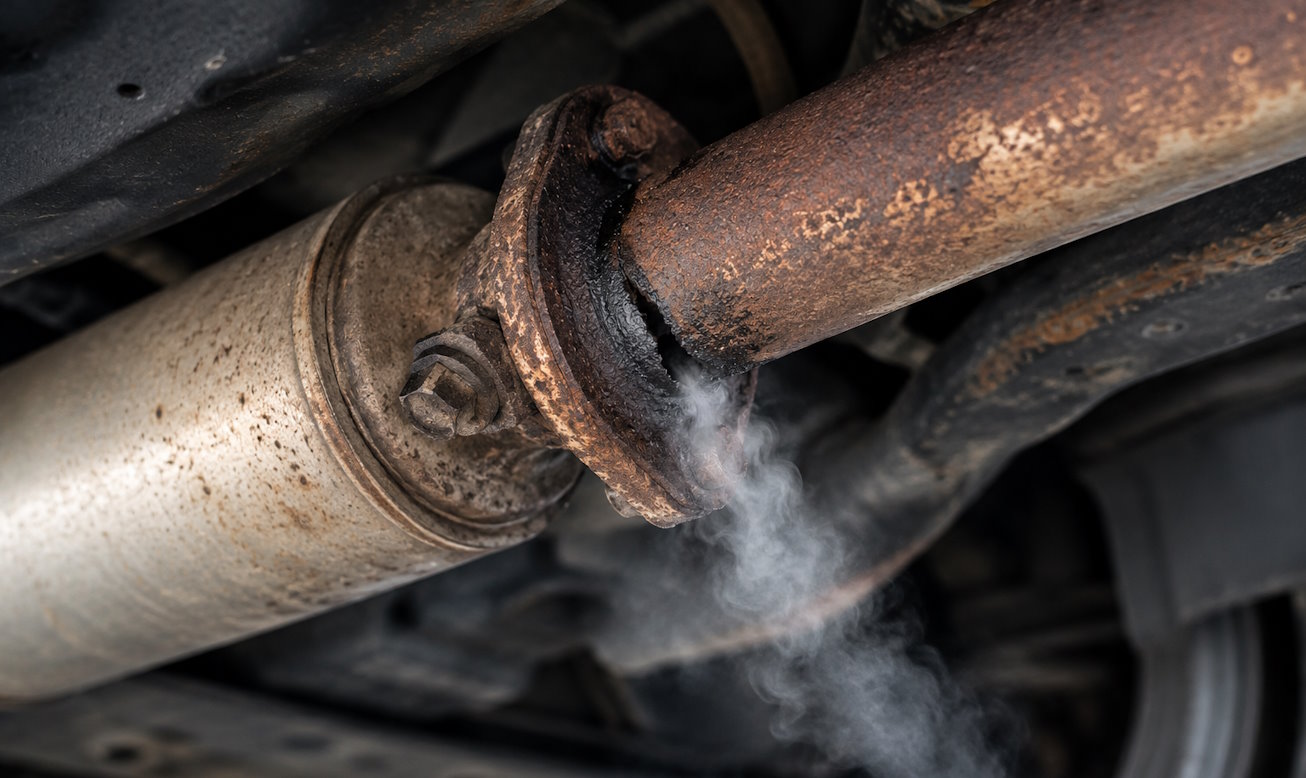
Your vehicle’s exhaust system is designed to safely carry harmful gases away from the engine and out through the tailpipe. When a crack, hole, damaged gasket, or loose connection develops anywhere in the system, exhaust gases can escape before reaching the rear of the vehicle.
Exhaust leaks can occur in:
- The exhaust manifold
- Exhaust manifold gasket
- Flex pipe
- Catalytic converter connections
- Muffler
- Exhaust pipes
- Welded joints and clamps
Because exhaust gases contain carbon monoxide and other harmful pollutants, even a small leak should be addressed promptly.
Common Signs of a Car Exhaust Leak
Before you start searching for the source of the leak, pay attention to the symptoms your vehicle is displaying.
Your Vehicle Is Louder Than Normal
One of the most common signs of an exhaust leak is increased engine noise. Many drivers describe it as a hissing, ticking, tapping, or rumbling sound that becomes more noticeable during acceleration.
You Smell Exhaust Fumes
If you notice exhaust odors inside the cabin, that’s a major red flag. Exhaust gases should never enter the passenger compartment. This symptom should be taken seriously because of the potential health risks associated with carbon monoxide exposure.
Reduced Fuel Economy
An exhaust leak can affect oxygen sensor readings and alter the engine’s air-fuel mixture, causing your vehicle to burn more fuel than necessary.
Loss of Power or Acceleration
If your vehicle feels sluggish when accelerating or lacks its usual performance, an exhaust leak may be disrupting proper exhaust flow.
Check Engine Light
Leaks near oxygen sensors or emissions components can trigger your check engine light and cause your vehicle to fail emissions testing.
How to Find an Exhaust Leak on Your Car
If you’re wondering how to find an exhaust leak on your car, here are a few methods that can help pinpoint the problem.
Perform a Visual Inspection
With the engine off and cool, inspect the exhaust system from the engine bay to the tailpipe.
Look for:
- Rusted sections
- Cracks in pipes
- Loose clamps
- Black soot marks
- Missing hardware
- Damaged gaskets
Black carbon deposits often indicate where exhaust gases are escaping.
Listen Carefully
Start the engine and listen for unusual sounds. Exhaust leaks often produce a ticking or hissing noise that becomes more pronounced when revving the engine.
A simple trick some technicians use is a length of rubber hose. One end is held near your ear while the other is carefully moved around suspected leak areas to help isolate the sound.
Use the Tissue Test
For small leaks, a lightweight tissue can sometimes help locate escaping exhaust gases. Hold the tissue near exhaust joints and connections while the engine is running. Movement in the tissue may indicate a leak.
Always perform this test outdoors and avoid placing your hands near hot exhaust components.
Look for Soot Around Connections
Exhaust gases leave behind dark carbon deposits. If you notice black residue around a flange, gasket, weld, or pipe connection, there’s a good chance you’ve found the leak source.
Have a Smoke Test Performed
The most accurate way to find exhaust leaks is with a professional smoke test. During this procedure, harmless smoke is introduced into the exhaust system while the vehicle is off. The escaping smoke quickly reveals even the smallest leaks. Many repair shops use this method because it is fast, safe, and highly effective.
What Causes Exhaust Leaks?
Several issues can cause exhaust leaks over time, including:
- Rust and corrosion
- Road salt exposure
- Impact damage from road debris
- Cracked exhaust manifolds
- Failed exhaust manifold gaskets
- Broken bolts or mounting hardware
- Worn flex pipes
- Aging exhaust components
In Connecticut, where winter road salt is common, corrosion is one of the leading causes of exhaust system failures.
What Should You Do If You Find an Exhaust Leak?
If you discover or suspect an exhaust leak, don’t ignore it.
While some leaks may seem minor initially, they often grow larger over time. What starts as a small crack can eventually lead to reduced performance, poor fuel economy, increased repair costs, and potential safety concerns.
A professional inspection can determine:
- The exact location of the leak
- Whether repair or replacement is needed
- If related components have been affected
- Whether emissions system damage has occurred
Exhaust Leak Diagnosis & Repair in Newington, CT
If you’re searching for how to find an exhaust leak, how to find an exhaust leak on your car, or you’ve already noticed signs of a car exhaust leak, the experienced team at Mike’s Auto Service can help.
Our technicians use professional diagnostic equipment to accurately locate exhaust leaks, identify the root cause, and recommend the most cost-effective repair solution. Whether it’s a leaking manifold gasket, damaged flex pipe, rusted muffler, or cracked exhaust pipe, we’ll get your vehicle operating safely and efficiently again.
Contact Mike’s Auto Service today to schedule an exhaust system inspection and keep your vehicle running quietly, safely, and efficiently.