
Signs of Pothole Damage: How Potholes Damage Your Vehicle
February 7, 2026
Potholes are more than just an inconvenience—they can cause serious and costly damage to your vehicle. From flat tires to suspension issues, hitting a pothole at speed can lead to problems you might not notice right away. Understanding the signs of pothole damage can help you catch issues early and avoid bigger repair bills down the road.
Below, we break down how potholes damage your car, what symptoms to watch for, and when it’s time to have your vehicle inspected.
How Do Potholes Damage Your Car?
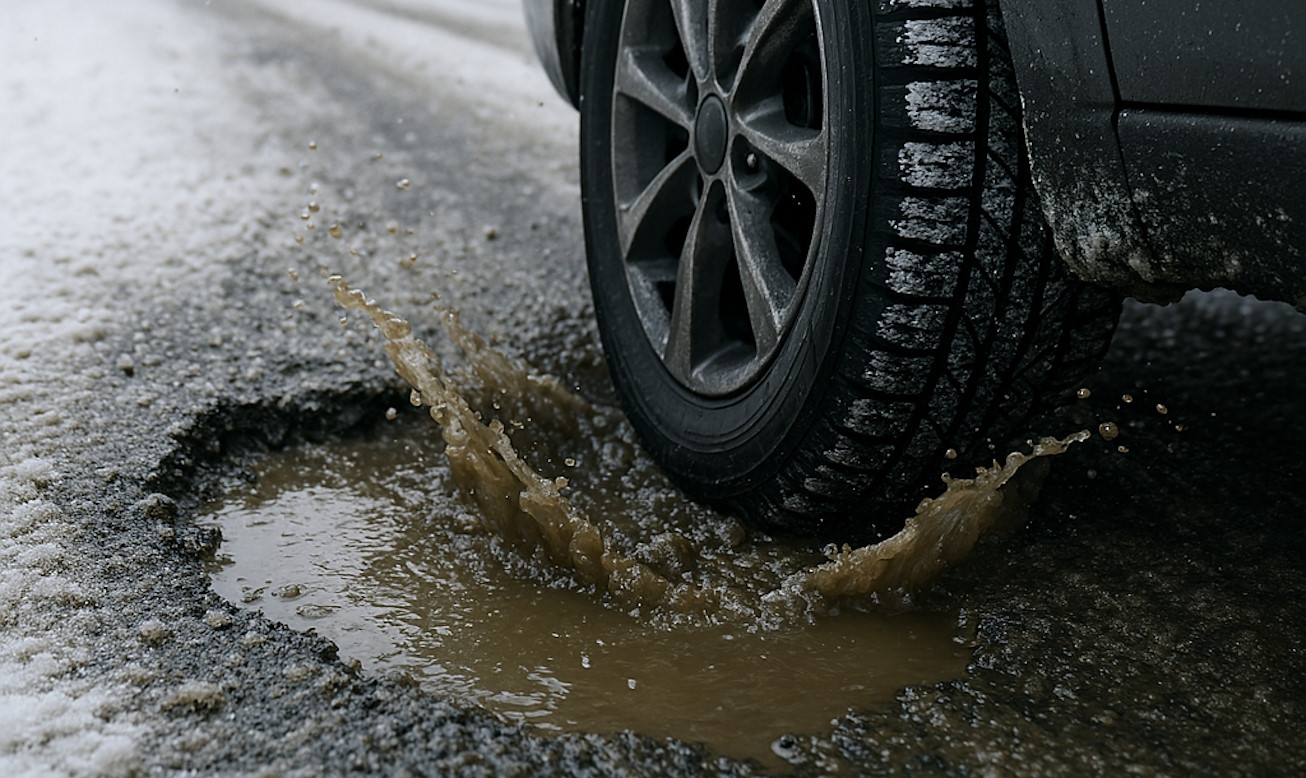
Potholes form when moisture seeps into cracks in the road, freezes, expands, and eventually breaks apart the pavement. When your car hits one, the impact transfers force directly into your tires, wheels, suspension, and steering components.
Common types of pothole car damage include:
- Tire sidewall punctures or blowouts
- Bent or cracked wheels
- Misaligned suspension components
- Damaged shocks and struts
- Steering system wear
Even a single pothole strike can cause hidden issues that worsen over time if ignored.
Signs of Pothole Damage to Watch For
1. Tire Damage or Flat Tires
Can potholes cause flat tires? Absolutely. One of the most common results of pothole tire damage is a sudden or slow air leak.
Signs include:
- Bulges or bubbles in the tire sidewall
- Rapid or gradual air loss
- Visible cuts or cracks
Pothole damage to tires often isn’t repairable and may require full replacement.
2. Vehicle Pulling to One Side
If your car starts drifting left or right after hitting a pothole, it could indicate alignment issues. This is a classic sign of pothole damage to a car’s suspension or steering components.
Ignoring alignment problems can lead to uneven tire wear and reduced handling.
3. Steering Wheel Vibration or Crooked Steering
A vibrating steering wheel—especially at higher speeds—may mean a bent wheel or damaged tire. If your steering wheel no longer sits straight when driving, pothole damage is a likely culprit.
4. Unusual Noises While Driving
Clunking, rattling, or knocking sounds after hitting a pothole often point to suspension damage.
These noises may indicate:
- Worn ball joints
- Loose or damaged control arms
- Failing shocks or struts
5. Uneven or Rapid Tire Wear
Misalignment or suspension issues caused by pothole damage can cause tires to wear unevenly. If you notice bald spots or excessive wear on one edge of a tire, it’s time for an inspection.
6. Reduced Ride Comfort
If your ride suddenly feels rough or bouncy, your shocks or struts may have been damaged by a pothole impact. This affects vehicle stability and braking performance, especially in wet or icy conditions.
Why Prompt Pothole Damage Repair Matters
Driving with unresolved pothole damage can lead to:
- Poor handling and longer stopping distances
- Accelerated tire wear
- Additional suspension and steering damage
- Higher repair costs over time
Catching problems early keeps your vehicle safe and helps prevent minor issues from turning into major repairs.
What to Do If You Hit a Pothole
If you hit a pothole hard:
- Check tire pressure as soon as possible
- Look for visible tire or wheel damage
- Pay attention to new noises or vibrations
- Schedule a professional inspection if anything feels off
Even if your car seems fine at first, some pothole damage takes time to show symptoms.
Trust Mike’s Auto Service to Diagnose Pothole Damage
If you suspect pothole damage to your tire or car, having a professional inspection is the safest move. The experienced technicians at Mike’s Auto Service can identify hidden issues, recommend repairs, and help you get back on the road with confidence.
From tire inspections and alignments to full suspension repairs, we’re here to keep your vehicle safe, smooth, and reliable—no matter what Connecticut roads throw your way.
Schedule your inspection today and drive with peace of mind.