

Oil Catch Cans: What They Are, What They Do & Why They Matter
March 14, 2026
Modern engines are designed for efficiency, performance, and emissions control—but those systems can sometimes introduce unwanted contaminants into your engine over time. One solution many performance enthusiasts and mechanics recommend is installing an oil catch can.
But what is an oil catch can, what does it actually do, and does your vehicle need one? Let’s break it down.
What Is an Oil Catch Can?
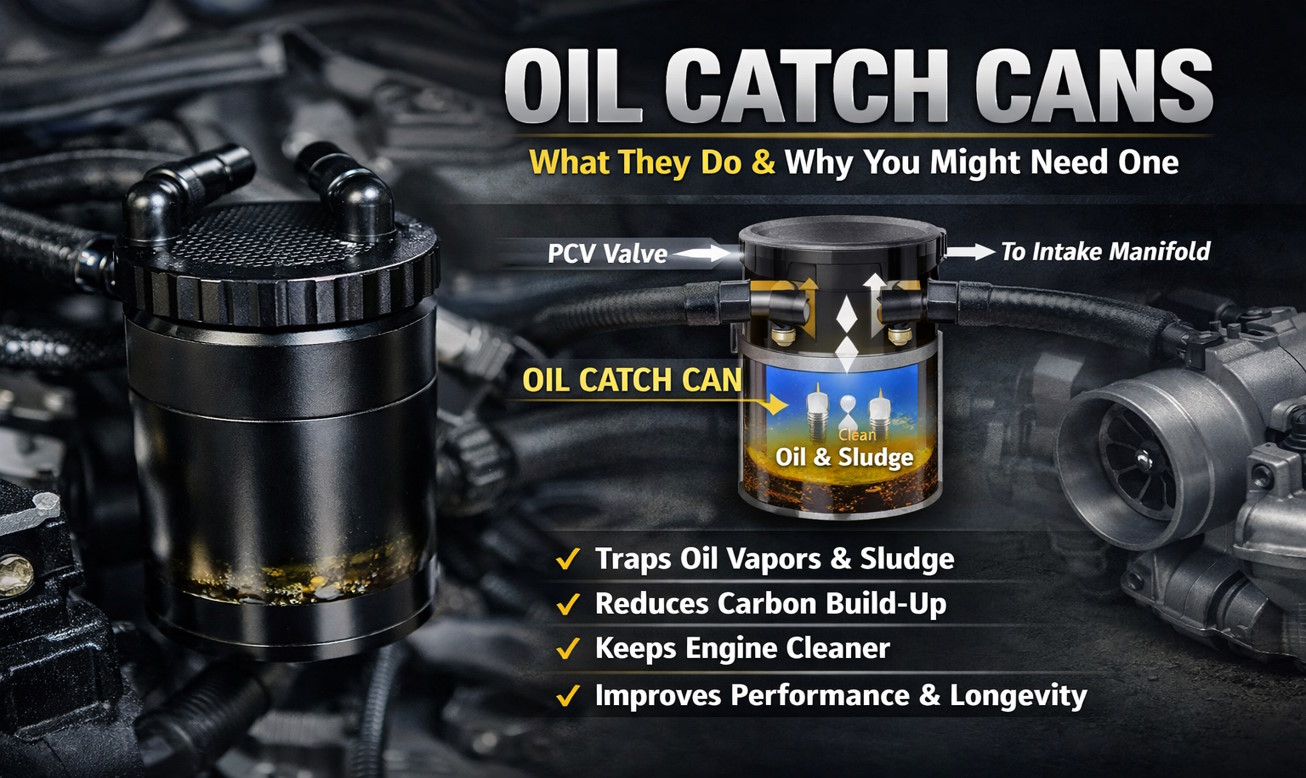
An oil catch can is a small aftermarket device installed within a vehicle’s positive crankcase ventilation (PCV) system. Its job is to capture and collect oil vapors and other contaminants before they are recirculated back into the engine’s intake system.
During normal engine operation, pressure builds inside the crankcase. The PCV system relieves that pressure by sending vapors back into the intake manifold so they can be burned during combustion.
The issue is that these vapors often contain:
- Oil mist
- Fuel vapors
- Carbon deposits
- Moisture
Without a catch can, these contaminants travel directly back into the intake system where they can build up over time.
A catch can kit installs inline between the PCV valve and intake system to trap those contaminants before they re-enter the engine.
What Does an Oil Catch Can Do?
So what does an oil catch can do in practical terms?
A catch can works as a filtration and separation device. Inside the can, a series of chambers, baffles, or filters slow down the airflow. This allows heavier particles like oil droplets and moisture to condense and collect in the can while the cleaner air continues through the system.
In simple terms, the purpose of an oil catch can is to prevent unwanted oil vapor and contaminants from reaching the engine’s intake system.
This helps keep critical components cleaner and functioning more efficiently.
Oil Catch Can Purpose: Why They Exist
The purpose of a catch can comes down to protecting your engine from buildup caused by recirculated oil vapors.
Over time, these vapors can accumulate on components such as:
- Intake valves
- Throttle bodies
- Intake manifolds
- Intercoolers (in turbocharged engines)
Direct injection engines are particularly prone to carbon buildup because fuel no longer washes over the intake valves like it does in older port-injection engines.
Installing a catch can kit helps reduce the amount of oil vapor entering the intake system, which can slow down or prevent these deposits from forming.
Oil Catch Can Benefits
There are several oil catch can benefits that make them appealing to drivers who want to protect engine performance and longevity.
Cleaner Intake System
By capturing oil vapor before it enters the intake, catch cans help prevent sludge and carbon buildup.
Improved Engine Efficiency
A cleaner intake system allows for better airflow and more consistent combustion.
Reduced Carbon Deposits
This is especially beneficial for direct injection engines, which are known for intake valve carbon buildup.
Longer Engine Life
Reducing contaminants circulating through the engine can help extend the lifespan of key components.
Helpful for Performance Vehicles
Turbocharged and high-performance engines tend to generate more crankcase vapor, making catch cans particularly beneficial.
Do You Need an Oil Catch Can?
While catch cans can provide real benefits, they aren’t necessary for every driver.
You may benefit from installing one if:
- You drive a turbocharged or supercharged vehicle
- Your engine uses direct fuel injection
- You plan to keep your vehicle for a long time
- You want to minimize carbon buildup
- You’re interested in performance upgrades
On the other hand, many vehicles operate perfectly well without a catch can, especially if they are stock and regularly maintained.
Are Catch Can Kits Easy to Install?
Most catch can kits are designed to be relatively straightforward to install. They typically include:
- The catch can itself
- Mounting brackets
- Hoses and fittings
- Instructions specific to the vehicle
However, installation does require basic mechanical knowledge, and proper placement is important for the system to function correctly.
A professional automotive technician can ensure the catch can is installed properly and safely.
Final Thoughts: Should You Add an Oil Catch Can?
Understanding what a catch can is and what it does helps drivers make informed decisions about engine protection and performance.
An oil catch can works by capturing oil vapors and contaminants before they reach the intake system, helping keep internal components cleaner and reducing long-term buildup.
While not every vehicle requires one, many modern engines—especially turbocharged and direct-injection models—can benefit from the added protection.
If you’re unsure whether a catch can kit makes sense for your vehicle, the experienced technicians at Mike’s Automotive in Newington can help evaluate your engine and recommend the best solution.
Regular maintenance and professional advice remain the best ways to keep your vehicle running smoothly for years to come.